What Makes Long Beach Different
Long Beach sits on top of the Wilmington Oil Field, one of the largest oil fields ever discovered in the continental United States, and it has been producing for a century. That history shapes soil gas work here in a way it does not in, say, Torrance or Pasadena. Buildings in the Wilmington, west Long Beach, and Signal Hill-adjacent corridors sit above active and abandoned wells, and the soil gas question is rarely just about radon.
Radon itself is modest here. The coastal plain alluvium under most of the city is not a strong uranium source, and our Long Beach test results skew low. What drives volume in this market is the multifamily stock: Long Beach has an enormous inventory of 1950s through 1970s garden apartments trading constantly, and every agency-financed transaction brings the radon question with it.
Buildings We Work On Here
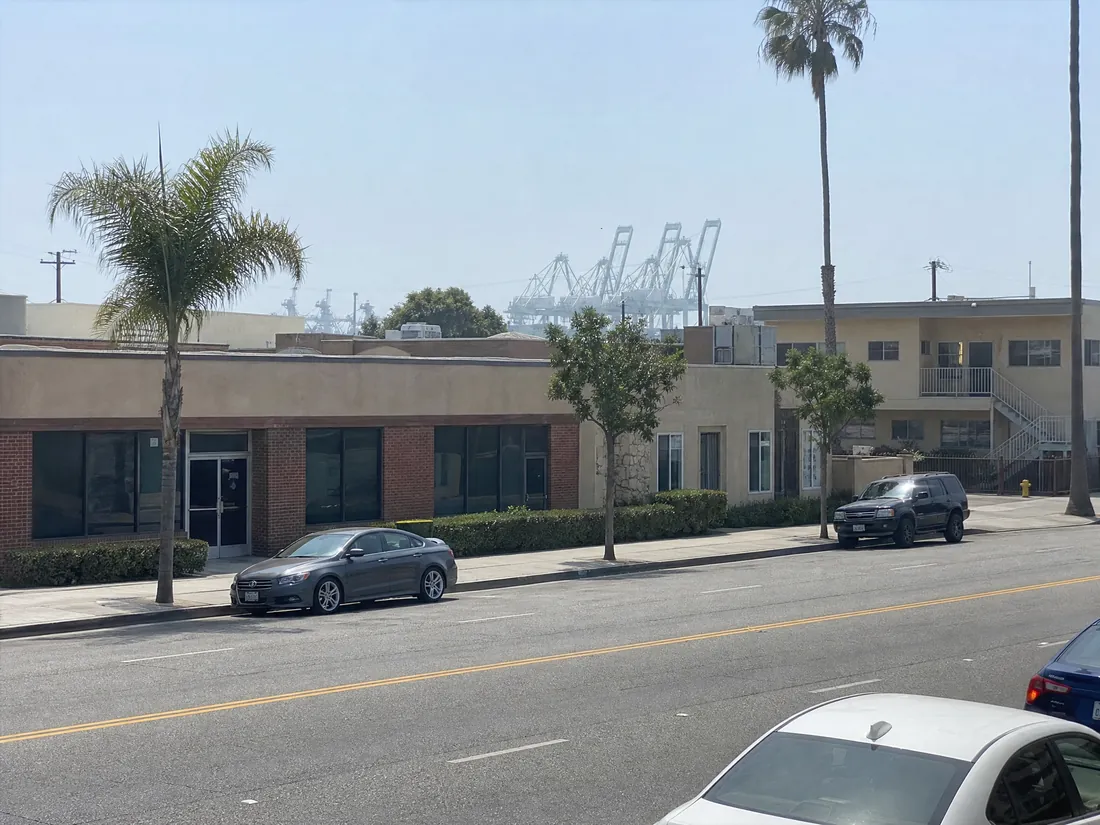
The recurring ones: garden-style apartment properties around Bixby Knolls and the Cal State Long Beach area, older commercial along Atlantic Avenue and Anaheim Street, port-adjacent warehouse and logistics buildings on the west side, and the newer office and life-science product around Douglas Park, which sits on the former Douglas Aircraft and Boeing land near the airport.
That Douglas Park area is worth naming specifically. Decades of aircraft manufacturing left a soil and groundwater legacy across that footprint, and buildings developed there frequently carry vapor intrusion requirements from the outset. Radon and VOC mitigation on those sites should be designed together, not sequentially.
What Triggers Testing in Long Beach
Lenders, overwhelmingly. Fannie, Freddie, and HUD-financed multifamily deals account for most of our Long Beach testing volume, and the timing is always compressed. Second is industrial due diligence around the port and the industrial belt, where a Phase I with a recognized environmental condition brings soil gas into scope. Third, and growing, is tenant-driven: logistics and life-science tenants signing long leases increasingly want indoor air documentation.
A 40-unit property near Signal Hill in 2024 is the one we still tell people about. Radon came back fine in every unit. What the same site visit turned up was a garage slab with visible staining and an odor that had nothing to do with radon, which the buyer's consultant then chased into a much larger conversation. Testing found the thing nobody was looking for.
Costs Around Here
Long Beach pricing tracks our general LA ranges: $650 to $1,800 for small commercial testing, $45 to $110 per unit for multifamily, $6,500 to $28,000 for mitigation depending on slab count and communication. The one local variable is roof work. A lot of Long Beach commercial stock has aging membrane roofs, and if a discharge penetration means bringing in a roofer to preserve a warranty, that adds $800 to $2,500 to the job.
What To Do Next
If a lender or consultant has put radon in scope on a Long Beach property, call with the unit count and the closing date. If you own industrial property near the port or on the west side, the more useful conversation is usually about vapor intrusion and whether radon is even the right thing to be measuring. Either way it starts with a walk-through.
Related: multifamily radon testing and warehouse and industrial systems.
Long Beach Questions
Is radon a problem in Long Beach?
Not usually. Long Beach sits on coastal plain alluvium that is a weak radon source, and our test results here skew low. The soil gas issues that do come up in Long Beach are more often petroleum related, given the Wilmington Oil Field beneath much of the city, or VOC related on formerly industrial parcels.
Why do lenders ask for radon testing on Long Beach apartment buildings?
Because agency and HUD multifamily programs treat radon as an environmental item regardless of local geology, and the consultant scoping the deal applies a national framework. In a low-radon market like this one the scope is often modest and the results come back clean, but the testing still has to be performed correctly and documented.
Do you work around the port?
Regularly. Port-adjacent warehouse and logistics buildings are a significant share of our Long Beach work, and on those sites the design question is usually whether the system needs to handle VOCs as well as radon.
Nearby service areas: Torrance · Santa Monica · Pasadena
Building in Long Beach that needs testing or a system? Call and we will get it scheduled.
Call (213) 845-6500