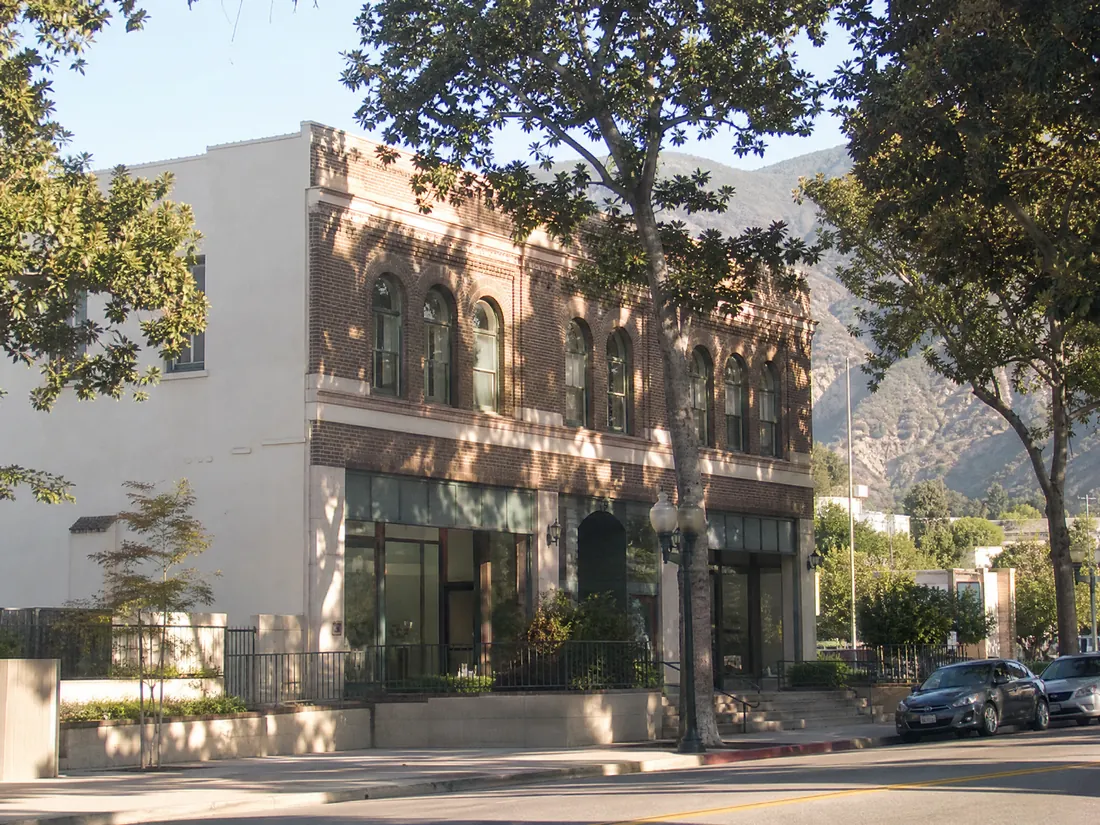
Old Buildings Behave Differently
Pasadena has more pre-1940 commercial building stock than almost anywhere else in the county, and that changes the work fundamentally. A 1926 storefront on Colorado Boulevard or a converted craftsman office off Lake Avenue is usually on a raised foundation with a crawl space, which means sub-membrane depressurization rather than core drilling. Different craft, different price structure, and a good deal more crawling.
The other geological factor: the northern part of the city runs up against the San Rafael Hills and the Arroyo Seco, where the granitic and sedimentary material is a more plausible radon source than the flat alluvium further south. Our higher Pasadena readings cluster in the north and northwest, not downtown.
Institutions Drive the Testing Here
Pasadena is dense with institutions that document things: private schools, Pasadena City College, Caltech-adjacent research and office property, Huntington Hospital and the medical office buildings orbiting it, and a very large nonprofit sector. These organizations test because boards and insurers ask, not because a lender is forcing it, and their documentation standards are higher as a result.
Our most common Pasadena engagement is a private school campus: test ground-contact classrooms during a cool-weather term, produce results room by room, and if anything is elevated, install over the following break. We have done enough of these that our proposals now include the plain-language parent summary by default rather than as an add-on.
Historic Buildings and Physical Constraints
Pasadena's design review and historic preservation requirements are real, and they affect where a riser and fan can go. Exterior piping on a designated historic facade is a non-starter, which pushes the work interior and up through the building, which costs more. We plan routing around this from the first walk-through instead of discovering it at permit.
Practical note: on several Old Pasadena buildings we have run risers up existing abandoned chimney chases, which is cheap, invisible, and only possible if somebody thinks to look.
Cost in Pasadena
Crawl space work dominates and prices differently: $12 to $22 per square foot of crawl space, so a 1,600 square foot crawl under a professional building runs $19,000 to $32,000. Slab buildings price normally at $6,500 to $15,000. Campus testing runs $2,200 to $4,800 for a 30-classroom school. Historic facade constraints and interior routing typically add 15% to 25%.
Getting Started
For a school or institution, call with the number of ground-contact rooms and your academic calendar. For an older commercial building, the first question is always foundation type, and if you do not know, we will find out on the walk-through.
Related: school and childcare radon and office building systems.
Pasadena Questions
Do Pasadena buildings have higher radon than the rest of LA County?
Some of them. Readings in the northern and northwestern parts of the city, up against the San Rafael Hills and the Arroyo, run higher than the flat southern areas, which is consistent with how radon behaves along the county's hillside margins generally. Downtown and southern Pasadena results are typically low.
Our building is on a raised foundation. Does that change the fix?
Yes, completely. Buildings on crawl spaces get sub-membrane depressurization, a sealed membrane across the crawl space floor with a fan pulling from beneath it, rather than a core-drilled sub-slab system. It costs more per square foot and the seal around piers is where the job succeeds or fails.
Can you install a system on a historic building without exterior piping?
Usually. Interior routing through mechanical chases, stairwells, and in a few Old Pasadena cases abandoned chimney chases keeps piping off a protected facade. Plan on 15% to 25% higher cost than an exterior-riser install.
Nearby service areas: Glendale · Burbank · Sherman Oaks
Building in Pasadena that needs testing or a system? Call and we will get it scheduled.
Call (213) 845-6500